Kimi K2: Moonshot AI’s Bet on Agentic Models Challenges OpenAI’s Operator
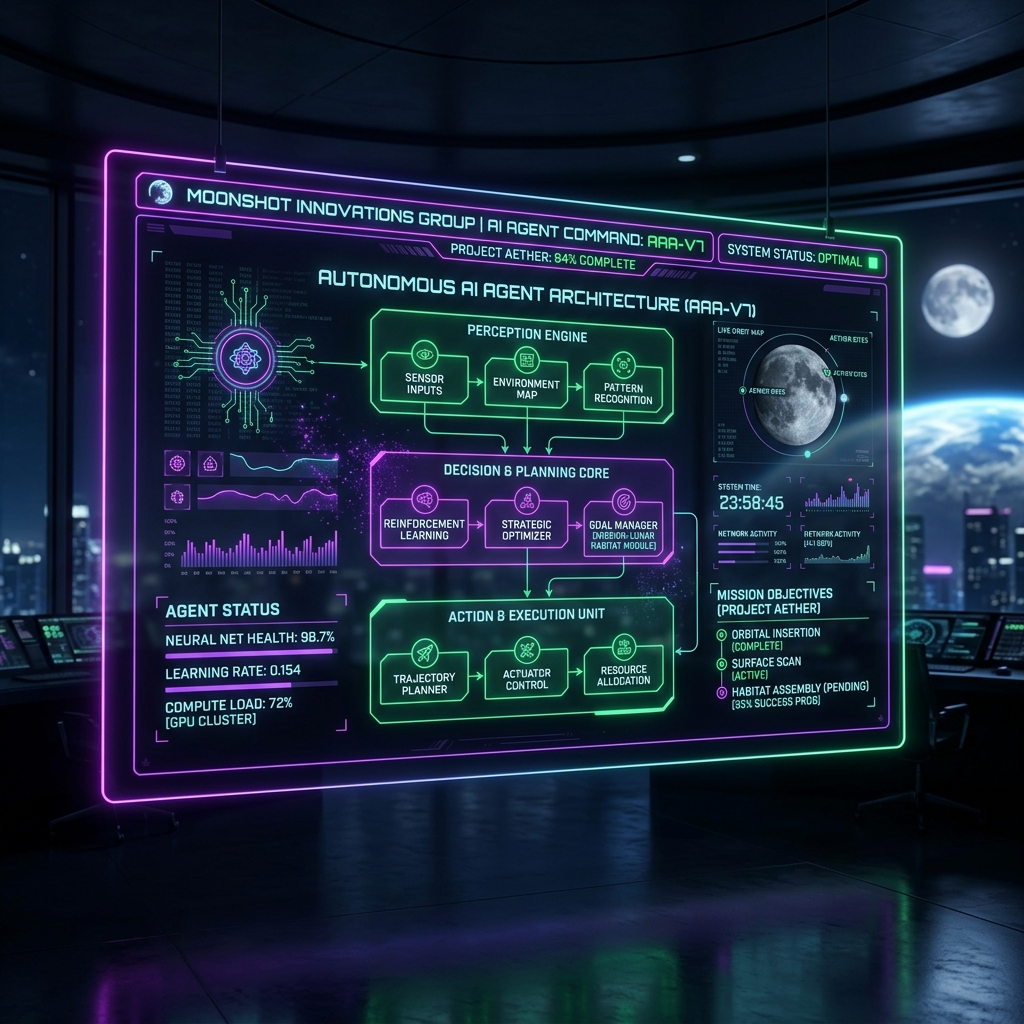
Moonshot AI, the Beijing-based startup behind the Kimi chatbot, has launched Kimi K2 — a large language model specifically designed for agentic tasks: complex, multi-step workflows where the AI autonomously uses tools, browses the web, writes and executes code, and iterates on its own outputs.
What Makes K2 Different
Unlike standard chatbot-oriented models, K2 was trained with agentic workflows as a primary use case. The model demonstrates strong performance on tool-use benchmarks like BFCL (Berkeley Function-Calling Leaderboard) and TAU-bench, where it competes with or exceeds OpenAI’s GPT-4o and Anthropic’s Claude in autonomous task completion.
The model supports a 128,000-token context window — enabling it to process entire codebases, legal documents, or long research papers in a single pass.
Pricing Advantage
At $0.14 per million input tokens, Kimi K2 is among the cheapest frontier-class agentic models available via API. The output pricing of $2.50/M tokens reflects the heavier computational cost of agentic inference (tool calls, multi-step reasoning), but still undercuts comparable Western alternatives.
The Agentic AI Race
The launch signals that China’s AI labs are not merely building better chatbots — they are racing toward autonomous AI systems capable of executing complex real-world tasks with minimal human intervention. Kimi K2 competes directly with OpenAI’s Operator, Anthropic’s Computer Use, and Google’s Project Mariner.
For the Global South, where engineering talent may be scarcer than in Silicon Valley, agentic AI systems capable of handling multi-step workflows autonomously represent a significant productivity opportunity.
With information from Moonshot AI.