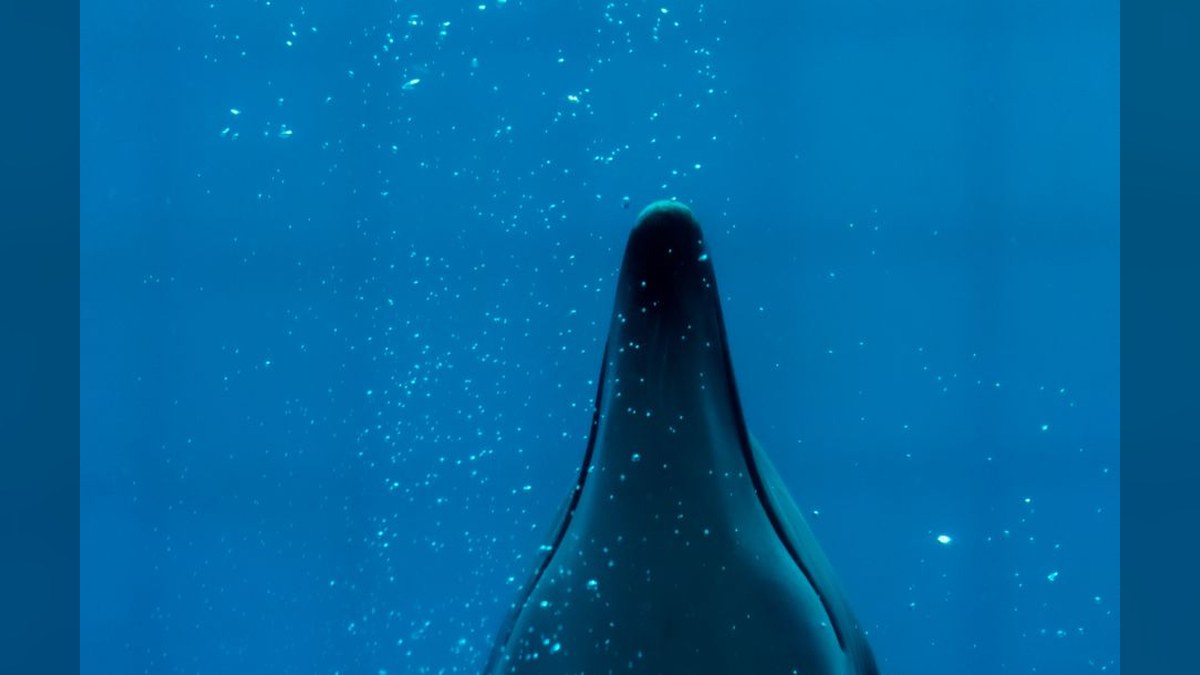
Recently, researchers from the University of St Andrews and the Université de Neuchâtel unveiled a new study on the unique sleep mechanism of sperm whales. This type of whale is the only known whale to rest in a vertical position, sleeping near the ocean surface, away from the disturbance of waves, while avoiding the energy expenditure required to dive deeper.
In an article published on July 23rd in the Journal of Experimental Biology, the researchers discovered that during rest, sperm whales release gas bubbles to help regulate their buoyancy and stay below the surface of the sea. This regulation is crucial because sperm whales naturally have positive buoyancy due to the large amounts of spermaceti oil in their heads. Moreover, sperm whales are breath-hold divers; if they slowly float upwards while resting, the gas in their lungs expands slowly, and the release of bubbles allows them to counterbalance the expanding dive gas and achieve a neutral buoyancy.
The researchers collected data by placing small suction cup tags on sperm whales along the Norwegian coast. These tags record the three-dimensional sound and movement of the animals. Clear bubble sounds were recorded by the tags, and the animal movement data was used to create a simulation based on tissue density, water resistance, and gas volumes in their bodies.
The results of the simulation confirmed that bubble release works to reduce the positive buoyancy of sperm whales, allowing them to remain submerged while resting. Additionally, the results indicate that sperm whales initiate rest dives with less dive gas volume than for deep foraging dives.
Professor Patrick Miller from the University of St Andrews’ Sea Mammal Research Unit commented: ‘This study confirms that sperm whales exquisitely control their buoyancy by releasing gas to remain submerged with almost neutral buoyancy just below the surface of the sea. It is particularly fascinating that they are able to make these fine-scale adjustments while being considered asleep, a challenge totally alien to terrestrial mammals like us, humans.’
The authors suspect that bubble release may be related to off-gassing excess CO2 or N2 from tissues to the lungs, so this behavior may also have implications for metabolic gas exchange.